
Professur für Wirtschaftspsychologie
Google H-Index [output_hindex author_id=“Eay7YvYAAAAJ&hl=en“ js_output=“false“]

Univ.-Prof. Dr. Alexandra Hoffmann
Telefon: +43 6212 2626 319
E-Mail: alexandra-julia.hoffmann@uni-seeburg.at
 |
 |
|
Assoc.-Prof. Dr. Theresa Treffers
Theresa Treffers ist seit 2016 Associate Professorin für Management und Entrepreneurship an der Privatuniversität Schloss Seeburg. Seit 2017 ist sie gleichzeitig wissenschaftliche Mitarbeiterin und Habilitandin an der TUM School of Management der Technischen Universität München (Lehrstuhl Prof. Dr. Isabell Welpe). Sie studierte BWL an der Ludwig-Maximilians-Universität in München und an der National University of Singapore. Anschließend absolvierte sie einen zusätzlichen Master of Business Research an der Ludwig-Maximilians-Universität München, an der sie 2011 auch promovierte. Nach der Promotion arbeitete sie als Postdoktorandin in einem durch die Deutsche Forschungsgemeinschaft geförderten Projekt an der Rotterdam School of Economics. Von 2013 bis 2016 war sie als Assistant Professorin in Entrepreneurship an der Technischen Universität Eindhoven in den Niederlanden beschäftigt. 2018 war sie Gastprofessorin an der Universität St. Gallen.
Ihre Forschungsinteressen beziehen sich auf den Einfluss psychologischer Faktoren auf das Entscheidungsverhalten in Organisationen und auf die Digitale Transformation von Unternehmen. Ihre Forschung wurde schon mehrfach ausgezeichnet mit Preisen und Best Paper Awards und in anerkannten Fachzeitschriften wie dem Journal of Economic Psychology, Journal for Business Economics, Entrepreneurship Theory & Practice oder Long Range Planning veröffentlicht. Sie lehrt zu Organisation, Führung, Human Ressource Management, Entrepreneurship & Innovation und empirischen Forschungsmethoden.
| Persönliche Angaben | |
| 29.12.1982 | Geboren als Theresa Michl in München (Deutschland) |
| Akademischer Werdegang | |
| Seit 2017 | Postdoctoral Scholar (Chair of Strategy & Organisation) an der TUM School of Management, Deutschland |
| Seit 2016 | Associate Professor in Entrepreneurship an der Privatuniversität Schloss Seeburg, Österreich |
| 09/2018-02/2020 | karenziert |
| 02/2018-07/2018 | Guest Professor in Entrepreneurship an der University of St.Gallen, Schweiz |
| 10/2015-02/2017 | karenziert |
| 2013-2016 | Assistant Professor in Entrepreneurship (Innovation, Technology, Entrepreneurship and Marketing, Department of Industrial Engineering & Innovation Sciences) an der Technischen Universität Eindhoven, Niederlanden |
| 2011-2013 | Postdoctoral Research Scientist (Insitute for Information, Organisation and Management) an der Munich School of Management, Ludwig-Maximilian-Universität München, Deutschland |
| 2008-2011 | PhD in Business Administration (Dr. oec. publ., summa cum laude) an der Munich School of Management, Ludwig-Maximilian-Universität München, Deutschland |
| 2009-2010 | Master in Business Research an der Ludwig-Maximilian-Universität München, Deutschland |
| 2003-2008 | Bachelor and Masters in Business Administration (Diplom-Kauffrau) an der Ludwig-Maximilian-Universität München, Deutschland |
| Mitgliedschaften | |
| German Academic Association for Business Research [VHB] (seit 2012), Academy of Management: Entrepreneurship Division and Managerial & Organizational Cognition (seit 2009) | |
Professur in Zahlen
Teammitglieder und betreute Dissertant:innen 4
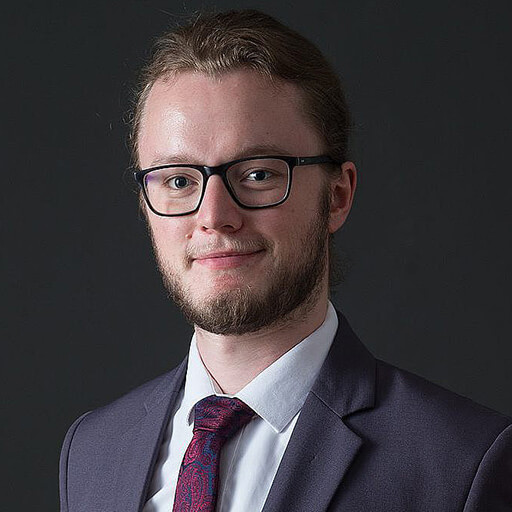
Jonas Milis
Externer Dissertant

Isabel Meyer
studentische Mitarbeiterin
Jonas Milis
Jonas Milis is now a doctoral researcher in this project. He completed his bachelor’s degree in psychology at Hochschule Fresenius and earned his psychology master’s degree from the University of Heidelberg. In his master’s thesis, he examined inadmissible evidence bias as a cognitive mechanism and its influence on mock juror decision-making. His broader research interests center on socio-cognitive processes in group settings, with the aim of better understanding how information processing, cognition, and social dynamics unfold in real-world situations.
Isabel Meyer
| BILDUNG | |
| 10/2025 | – aktuell Masterstudium Psychologie, Universität Innsbruck
|
| 10/2022 – 09/2025 | Bachelorstudium Psychologie, Universität Innsbruck
|
| 07/2021 | Cambridge Certificate in Advanced English, C1 |
| 06/2021 | Allgemeine Hochschulreife, Regentalgymnasium Nittenau, D |
| PRAKTISCHE ERFAHRUNGEN | |
| 11/2025 – 02/2026 | Mitarbeit beim MOOC-Projekt „Behavioral Science & Psychology“ der Universitäten Innsbruck & Bozen |
| 10/2025 – 12/2025 | Mitarbeit in der Unternehmensberatung, CATRO Personalberatung, Innsbruck |
| 09/2025 – 11/2025 | Mitarbeit beim MOOC-Projekt „Digital Transformation of the HR function“ der Universitäten Innsbruck und Bozen |
| 01/2025 – 04/2025 | Praktikum in Klinischer Suchtpsychologie, Therapie- und Gesundheitszentrum Mutters, Mutters
|
| 05/2024 – 07/2024 Praktikum in Klinischer Psychologie, Psychosomatische Station, Landeskrankenhaus Innsbruck |
|
| 03/2023 – 06/2023 | Praxis-Wahlmodul „Kinder- und Jugendpsychiatrie“, Medizinische Universität Innsbruck x Landeskrankenhaus Hall |
| INTERNATIONALE ERFAHRUNGEN | |
| 01/2026 – 05/2026 | Gaststudentin bei Chulalongkorn University, Bangkok, Thailand |
| 09/2024 – 12/2024 | Gaststudentin bei McMaster University, Hamilton, ON, Kanada |
| 01/2018 – 04/2018 | Selbstorganisierter Lernaufenthalt bei Onehunga High School, Auckland, Neuseeland |
Profil der Professur
- Teamarbeit, Kooperation, Problemlösung
- Charismatische Führung und Mitarbeiterperformance
- Physiologische Erregung als Prädiktor für Leistung
- Nachhaltige Konsumentscheidungen, Wahrnehmung/Aufmerksamkeit von Nachhaltigkeitslabels
WS2026/2027
Master Wirtschaftspsychologie
- Werbepsychologie, Konsumentenverhalten & Nachhaltigkeit
- Green Behavioral Economics
SS 2027
Bachelor Wirtschaftspsychologie
- Bachelorseminar
- Journal Club
Master Wirtschaftspsychologie/BWL
- Advanced Journal Club
| 2026 | Masterarbeiten | 7 |
| 2025 | Masterarbeiten | 16 |
| 2024 | Masterarbeiten | 10 |
| 2023 | Masterarbeiten | 8 |
| 2022 | Masterarbeiten | 1 |
| 2021 | Masterarbeiten | 2 |
| 2020 | Masterarbeiten | 4 |
| 2018 | Masterarbeiten Co-Betreuung | 2 |
| 2017 | Bachelorarbeiten Co-Betreuung | 3 |
Über Univ.-Prof. Dr. Alexandra Hoffmann
Univ.-Prof.in Dr. Alexandra Hoffmann, Professorin für Wirtschaftspsychologie an der Fakultät für Management der Privatuniversität Schloss Seeburg, widmet sich mit ihrem Team der Erforschung psychologischer Phänomene im wirtschaftlichen Kontext. Ihre wissenschaftlichen Schwerpunkte umfassen dabei insbesondere die soziale Aufmerksamkeit und den Blickkontakt in kontrollierten sowie realen Umgebungen.
In meiner Forschung habe ich mich in den letzten 6 Jahren vorrangig mit Eyetracking und Psychophysiologie auseinandergesetzt, wobei sich mein Fokus mittlerweile auf soziale Interaktionen sowie die soziale Aufmerksamkeit gelegt hat. In laufenden und geplanten Projekten bringe ich demnach mobiles Eyetracking und auch Methoden zur Erfassung der Elektrodermalen Aktivität (EDA) und der kardiovaskulären Reaktivität (Elektrokardiogramm; EKG) während sozialer Interaktionen zum Einsatz, sodass Blickbewegungsdynamiken sowie physiologische Synchronisierungsprozesse beobachtet und die Wahrnehmung sowie Aufmerksamkeit im sozialen Kontext erfasst werden können. Dies wurde bereits im Speed Dating Projekt gemacht, in welchem duales mobiles Eyetracking zur Bestimmung der Häufigkeit des Blickkontakts während des Kennenlernens im Zusammenhang zur Partnerwahl gesetzt wurde. Zudem wurde mithilfe der Eyetracking-Brillen die Synchronisierung der Blinzelfrequenz zwischen zwei Team-Mitgliedern gemessen und im Zusammenhang zur Problemlösefähigkeit während virtueller Zusammenarbeit gebracht. Hierfür habe ich mir Expertise in Bereich der Blickbewegungsanalyse und -kodierung sowie Pupillometrie angeeignet.
Kürzlich habe ich aufbauend auf dieser Forschung außerdem eine Förderung der Deutschen Forschungsgemeinschaft im Rahmen des Schwerpunktprogramms „Blicke verstehen“ erhalten; in diesem Projekt möchte ich untersuchen, welchen Einfluss Blickkontakt und synchrones Blinzeln auf kooperatives Verhalten haben. Im Zentrum steht die Frage, inwiefern nonverbale Signale wie etwa gleichzeitiger Blickkontakt und die Synchronisierung der Blinzelfrequenz zwischenmenschliches Vertrauen, ökonomische Entscheidungen und gemeinsames Problemlösen beeinflussen. Das Projekt setzt modernste mobile Eyetracking-Technologie ein, um diese subtilen Verhaltensdynamiken empirisch zu analysieren.
Meine Buchempfehlung
Mein Lieblingszitat
Mein Tipp an Studierende
Mein kuriosestes Erlebnis
Mein perfekter Tag
Meine Hörbuch-/Podcastempfehlung
Publikationen und Transferleistungen der Professur
Moder, S., Hoffmann, A., & Furtner, M. (2026). The job demands-resources seesaw: Dynamic interactions between task demand types and personal resources. Acta Psychologica, 269, 107474. https://doi.org/10.1016/j.actpsy.2026.107474
Hoffmann, A., Stork, P., Madysa, M., & Borgianni, Y. (2025). How attractive is sustainability in products: A Systematic Review about eye-tracking studies on sustainability labels. Journal of Environmental Psychology, 101, 102519. https://doi.org/10.1016/j.jenvp.2025.102519
Hoffmann, A., Schellhorn, A. M., Ritter, M., Sachse, P., & Maran, T. (2024). Blink synchronization increases over time and predicts problem-solving performance in virtual teams. Small Group Research, 55(5), 706-728. https://doi.org/10.1177/10464964231195618
Hoffmann, A., Schiestl, S., Sinske, P., Gondan, M., Sachse, P., & Maran, T. (2024). Sharing and Receiving Eye-Contact Predicts Mate Choice After a 5-Minute Conversation: Evidence from a Speed-Dating Study. Archives of Sexual Behavior. https://doi.org/10.1007/s10508-023-02806-0
Hoffmann, A., Marin, M., & Maran, T. (2023). The perspective makes the leader: The camera perspective in a leader photograph shapes their charismatic effect and observers’ approval. Journal of Leadership and Organizational Studies, 15480518231191979. https://doi.org/10.1177/15480518231191979
Maran, T., Hoffmann, A., & Sachse, P. (2022). Early lifetime experience of urban living predicts social attention in real world crowds. Cognition, 225, 105099. https://doi.org/10.1016/j.cognition.2022.105099
Duschek, S., Hoffmann, A. & Reyes del Paso, G.A. (2017). Affective impairment in chronically low blood pressure. Journal of Psychosomatic Research, 93, 33-40. doi:10.1016/j.jpsychores.2016.12.008
Duschek, S., Hoffmann, A., Reyes del Paso, G.A. & Ettinger, U. (2017). Autonomic cardiovascular control and executive function in chronic Hypotension. Annals of Behavioral Medicine, 51, 442-453. doi:10.1007/s12160-016-9868-7
Hoffmann, A., Ettinger, U., Reyes del Paso, G.A. & Duschek, S. (2017). Executive function and cardiac autonomic regulation in depressive disorders. Brain and Cognition, 118, 108-117. doi:10.1016/j.bandc.2017.08.003
Duschek, S., Hoffmann, A., Montoro, C. & Reyes del Paso, G.A. (2017). Autonomic Cardiovascular Dysregulation at Rest and During Stress in Chronically Low Blood Pressure. Journal of Psychophysiology, 33, 39-53. doi:10.1027/0269-8803/a000204
Duschek, S., Hoffmann, A., Montoro, C. I., Reyes del Paso, G. A. R., Schuepbach, D., & Ettinger, U. (2018). Cerebral blood flow modulations during preparatory attention and proactive inhibition. Biological Psychology, 137, 65-72. doi:10.1016/j.biopsycho.2018.07.003
Hoffmann, A., Montoro, C. I., Reyes del Paso, G. A., & Duschek, S. (2018). Cerebral blood flow modulations during cognitive control in major depressive disorder. Journal of Affective Disorders, 273, 118-125. doi:10.1016/j.jad.2018.05.011
Hoffmann, A., Montoro, C. I., Reyes del Paso, G. A., & Duschek, S. (2018). Cerebral blood flow modulations during proactive control in major depressive disorder. International Journal of Psychophysiology, 133, 175-181. doi:10.1016/j.ijpsycho.2018.07.003
Hoffmann, A., Ettinger, U., Montoro, C., Reyes del Paso, G. A., & Duschek, S. (2018). Cerebral Blood Flow Responses during Prosaccade and Antisaccade Preparation in Major Depression. European Archives of Psychiatry and Clinical Neuroscience, 1-10. doi:10.1007/s00406-018-0956-5
Duschek, S., Hoffmann, A., Bair, A., Reyes del Paso, G. A., & Montoro, C. I. (2018). Cerebral blood flow modulations during proactive control in chronic hypotension. Brain and Cognition, 125, 135-141. doi:10.1016/j.bandc.2018.06.008
Duschek, S., Hoffmann, A., Montoro, C. I., Bair, A., Reyes del Paso, G. A., & Ettinger, U. (2018). Cerebral blood flow modulations during antisaccade preparation in chronic hypotension. Psychophysiology, 56(3), e13305. doi:10.1111/psyp.13305
Hoffmann, A., Maran, T., & Sachse, P. (2020). How we perceive others resembling us. i-Perception, 11(6), 2041669520966623.
Duschek, S., Hoffmann, A., Reyes del Paso, G. A., & Montoro, C. I. (2020). Short-term Cerebral Blood Flow Variability in Major Depressive Disorder. Journal of Affective Disorders, 281, 1120-1124. doi:10.1016/j.jad.2020.12.136
Duschek, S., Bair, A., Hoffmann, A., Marksteiner, J., Montoro, C. I., & Reyes del Paso, G. A. (2021). Cardiovascular variability and reactivity in major depressive disorder. Journal of Psychophysiology, 35(4), 243–256. doi:10.1027/0269-8803/a000277
Sachse, P., Beermann, U., Goller, P., Huber, S. E., Furtner, M. R., Maran, T., Marhenke, R., Tabuchi, H., Hoffmann, A., Büsel, C., & Martini, M. (2021). We see the modern psychologist rather in the laboratory than in the study room – The alley experiments by Franz Hillebrand (1863-1926). Psychology of Everyday Activity, 14(1), 45-55.
Hoffmann, A., Büsel, C., Ritter, M., & Sachse, P. (2021). Do emotional stimuli interfere with response inhibition? Evidence from the antisaccade paradigm. Cognition & Emotion, 35(8), 1626 – 1633. doi:10.1080/02699931.2021.1979475
Hoffmann, A., Marhenke, R., & Sachse, P. (2021). Sensory processing sensitivity predicts performance in an emotional antisaccade paradigm. Acta Psychologica, 222, doi:10.1016/j.actpsy.2021.103463
Hoffmann, A., Maran, T., Grünbaum, T., Liegl, S., Lobis, U., & Sachse, P. (2022). A psychophysiological investigation of Mourning: There are two sides to the story. Motivation & Emotion. doi:10.1007/s11031-022-09928-3
Hoffmann, A., Nolte, J. P., & Sachse, P. (2022). Variation in Antisaccadic Response Latencies Investigated with the Hierarchical LATER Process Model. Brain & Cognition, 158, 105850. doi:1016/j.bandc.2022.105850
Maran, T., Hoffmann, A., & Sachse, P. (2022). Early lifetime experience of urban living predicts social attention in real world crowds. Cognition, 225, 105099. doi:10.1016/j.cognition.2022.105099
Hoffmann, A., Ellmerer, P., Maran, T., & Sachse, p. (2022). Cardiovascular reactivity during sadness induction predicts inhibitory control performance. Physiology & Behavior, 113869. doi:10.1016/j.physbeh.2022.113869
Hoffmann, A., Schellhorn, A.–M., Ritter, M., Sachse, P., & Maran, T.
(2023). Blink Synchronization Increases Over Time and Predicts Problem-Solving Performance in Virtual Teams. Small Group Research, 10464964231195618. doi:10.1177/10464964231195618
Hoffmann, A., Marin, M., & Maran, T. (2023). The perspective makes the leader: The camera perspective in a leader photograph shapes their charismatic effect and observers’ approval. Journal of Leadership and Organizational Studies, 30(4), 442-463. doi:10.1177/15480518231191979
Sidoroff, V., Carbone, F., Ellmerer, P., Bair, S., Hoffmann, A., Maran, T., Krismer, F., Mahlknecht, P., Mair, K., Raccagni, C., Ndayisaba, J.-P., Seppi, K., Wenning, G. K., & Djamshidian, A. (2023). Emotion Recognition in Multiple System Atrophy – An exploratory Eye-Tracking Study. Journal of Movement Disorders. doi:10.14802/jmd.23090
Hoffmann, A., Schiestl, S., Sinske, P., Gondan, M., Sachse, P., & Maran, T. (2024). Sharing and Receiving Eye-Contact Predicts Mate Choice After a 5-Minute Conversation: Evidence from a Speed-Dating Study. Archives of Sexual Behavior, 53(3), 959-968. doi:10.1007/s10508-023-02806-0
Büsel, C., Seiz, C. M., Hoffmann, A., Sachse, P., & Ansorge, U. (2024). EXPRESS: Swift Attenuation of Irrelevant Features Through Feature Consistency–Evidence From a Capture-Probe Version of the Contingent-Capture Protocol. Quarterly Journal of Experimental Psychology, 77(5), 994-1008. doi:10.1177/17470218231186045
Hoffmann, A., Stork, P., Madysa, M., & Borgianni, Y. (2025). How Attractive is Sustainability in Products: A Systematic Review about Eye-tracking Studies on Sustainability Labels. Journal of Environmental Psychology, 101, 102519. doi:10.1016/j.jenvp.2025.102519
Ritter, M., Hoffmann, A., Rauch, N., Sachse, P., Djamshidian, A., Harders, M., & Ellmerer, P. (2025). SPBView: An extendable data analysis and combined visualization tool for saccadic eye-movement, pupil size, and blink detection. SoftwareX, 30, 102171. doi:10.1016/j.softx.2025.102171
Moder, S., Hoffmann, A., & Furtner, M. (2026). The Job Demands-Resources Seesaw: Dynamic Pathways of Mindfulness and Psychological Capital as Personal Resources. Acta Psyhhologica, 269, 107474. doi:1016/j.actpsy.2026.107474
Hoffmann, A. (01.10.2023). Im richtigen Winkel zum Erfolg (Interview). wissenswert – Magazin der Universität Innsbruck (S. 18).
Hoffmann, A. (16.05.2024). Partner-Vorhersage mit Brille. Kronen Zeitung (S. 25).
Hoffmann, A. (16.06.2024). Mit Blicken Verhalten voraussagen (Interview). wissenswert – Magazin der Universität Innsbruck (S. 6-7).
Hoffmann, A. (25.06.2024). Mit Blicken Entscheidungen und Verhalten voraussagen. Dolomiten – Tagblatt der Südtiroler (S. 6).
Hoffmann, A. (26.10.2024). Schau mich an! Tiroler Tageszeitung Magazin (S. 12-13).
Hoffmann, A. (07.05.2025). Erstes Eyetracking-Symposium. Newsroom UIBK https://www.uibk.ac.at/de/newsroom/2024/erstes-eyetracking-symposium/
Hoffmann, A. (27.05.2025). Die Psychologie des Augenblicks. Dolomiten – Tagblatt der Südtiroler (S. 6).
Hoffmann, A. (27.05.2025). Die Psychologie des Augenblicks. Zukunft Forschung (S. 30–31). https://ulb-dok.uibk.ac.at/ZuFo/periodical/pageview/11916999
Hoffmann, A. (11.09.2025). Eye-Tracking Labor erhält Förderung von der DFG. Newsroom UIBK. https://www.uibk.ac.at/de/newsroom/2025/eye-tracking-labor-erhalt-forderung-von-der-dfg/
Mack, D. (24.01.2026). A Feast for the Eyes – A buzzy new word encapsulates a previously undefined, yet nearly universal crush. Slate. https://slate.com/life/2026/01/dating-crush-eye-contact-situationship-love-lust-limerance.html
Lermann, C. (28.07.2026). Schweizer Phänomen: «Sie starren und lächeln nie»: Wie schlimm ist der Swiss Stare?. 20 Minuten. https://www.20min.ch/story/schweizer-phaenomen-sie-starren-und-laecheln-nie-wie-schlimm-ist-der-swiss-stare-103607738
Duschek, S., Hoffmann, A., & Reyes del Paso, G.A. (2017). Affective impairment in chronic low blood pressure. Annual Scientific Meeting of the American Psychosomatic Society, Sevilla, Spain, March 15–18.
Hoffmann, , Bair, A., Ettinger, U., Reyes del Paso, A., & Duschek S. (2017). Mood impairment and depressive symptoms in chronic low blood pressure. International Convention of Psychological Science, Vienna, Austria, March 23–25.
Hoffmann, A., Ettinger, U., Reyes del Paso, A. & Duschek S. (2017). Cardiac regulation and executive functioning in unipolar affective disorders. Tagung experimentell arbeitender Psychologen, Dresden, Germany, March 26–29.
Duschek S., Hoffmann A., Montoro C., Reyes del Paso G.A., Ettinger U (2017). Cerebral blood flow modulations during response preparation and proactive inhibition. The 17th Annual Meeting of the Society for Psychophysiological Research. Psychophysiology; 54 (Suppl. 1): S69.
Hoffmann, A., Montoro, C., Reyes del Paso, G. A., & Duschek, S. (2018). Cerebral blood flow modulations during cognitive control in major depressive disorder. 30th APS Annual Convention, San Francisco, USA, May 24–27.
Bair, A., Hoffmann, A., Montoro, C. I. & Duschek, S. (2019). Cerebral Blood Flow Modulations During Proactive Control in Chronical Low Blood Pressure. Tagung experimentell arbeitender Psychologen, London, UK, April 15–17.
Duschek, S., Bair, A., Hoffmann, A., Montoro, C. I. & Ettinger, U. (2019). Cerebral Blood Flow Modulations during Precued Antisaccades in Chronic low Blood Pressure. Tagung experimentell arbeitender Psychologen, London, UK, April 15–17.
Hoffmann, A., Büsel, C., & Sachse, P. (2020). LATER modelling of emotional antisaccades. Tagung experimentell arbeitender Psychologen, Jena, Germany, March 22–25.
Hoffmann, A., Marhenke, R., & Sachse, P. (2021). Sensory processing sensitivity predicts performance in an emotional antisaccade paradigm. The 32nd International Congress of Psychology, Prague, Czech Republic, July 18–23.
Hoffmann, A., Maran, T., Grünbaum, T., Liegl, S., Lobis, U., & Sachse, P. (2022). A psychophysiological investigation of Mourning. Tagung experimentell arbeitender Psychologen, Köln, Germany, March 20–23.
Sidoroff, V., Carbone, F., Ellmerer, P., Bair, S., Hoffmann, A., Maran, T., Raccagni, C., Seppi, K., Wenning, G., & Djamshidian, A. (2022). Emotion recognition in multiple system atrophy: an eye-tracking study. Jahrestagung der Österreichischen Gesellschaft für Neurologie, Graz, Austria, May 18–20.
Sidoroff, V., Carbone, F., Ellmerer, P., Bair, S., Hoffmann, A., Maran, T., Raccagni, C., Seppi, K., Wenning, G., & Djamshidian, A. (2022). Emotion Recognition in Multiple System Atrophy-an Eye-Tracking Study. European Journal of Neurology, 29, 615.
A., Schellhorn, A.–M., & Sachse, P. (2023). Blink Synchronization Increases Over Time and Predicts Problem-Solving Performance in Virtual Teams. 23rd Conference of the European Society for Cognitive Psychology, Porto, Portugal, September 06–09.
Talamini, F., Hoffmann, A., Martini, M., & Zentner, M. (2023). A behavioral and objective assessment of music-evoked emotions: the potential of mood-congruency tasks. 17th International Conference on Music Perception and Cognition, Tokio, Japan, August 24–28.
Hoffmann, A. (2024). Dual mobile eye-tracking during social interactions to predict problem-solving performance & decision-making behaviour. 22nd European Conference on Eye Movements, Maynooth, Ireland, August 25–
Hoffmann, A., Schiestl, S., Sinske, P., Gondan, M., Sachse, P., & Maran, T. (2024). Sharing and Receiving Eye-Contact Predicts Mate Choice after a 5-Minute Conversation: Evidence from a Speed-Dating Study. 53rd DGPs congress / 15th ÖGP conference, Vienna, Austria, September 16–
Talamini, F., Bannister, S., Martini, M., Hoffmann, A., Zentner, M. (2025). How music-evoked emotions shape memory for emotional stimuli: A multimodal investigation using behavioral and physiological measures. 24th Conference of the European Society for Cognitive Psychology, Sheffield, United Kingdom, September 1–6.
Hoffmann, A. (2025). Blickverhalten in zwischenmenschlichen Interaktionen. Endokrinologie, Weimar, Germany, September 11–13.
Hoffmann, A. (2026). Social Attention and Eye-Contact: Human Responses to Faces in Controlled and Real-World Environments. Forschungskolloquium, Institut für Psychologie, Universität Würzburg, Germany, July 6th.
Milis, J. R. N., Bohn, L., Herdlinger-Ritter, M., Sachse, P., & Hoffmann, A. (2026). Mutual gaze and blink synchronization as predictors of trust and cooperative behavior: Evidence from dual mobile eye-tracking. 23rd European Conference on Eye Movements, Ulm, Germany, August 30 – September 3.
Hoffmann, A., Häfele, F., & Gollan, B. (2026). Lie to me: Avoidance of Eye-contact and Increase in Cognitive Load as Indicators of Deception. 23rd European Conference on Eye Movements, Ulm, Germany, August 30 – September 3.